Retinal images and CIMT
Paired retinal photographs and CIMT measurements allow us to investigate vascular associations.
 Open demo
We investigate whether retinal image analysis can provide useful information for cardiovascular risk assessment in hospital care.
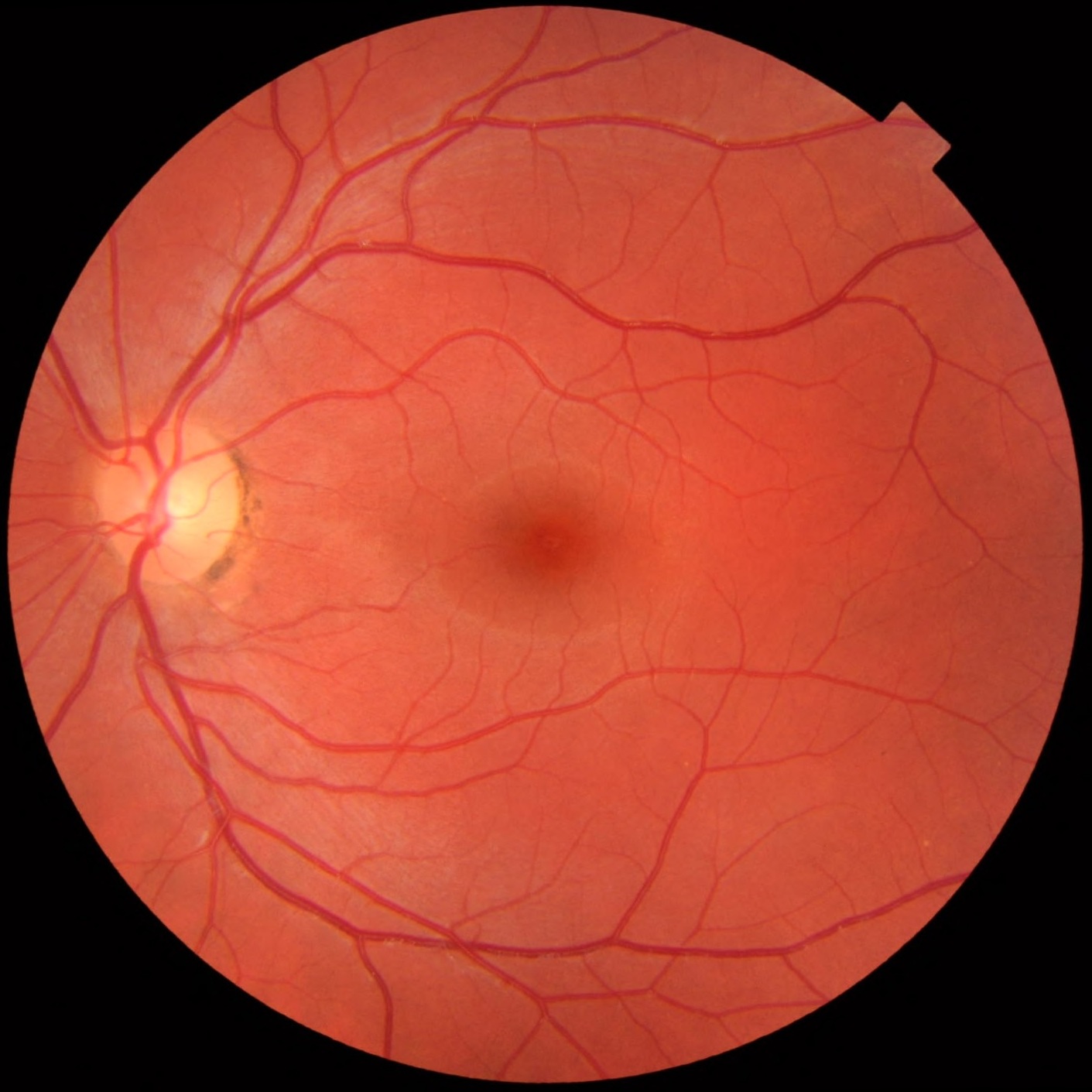
Retinal photographs offer a non-invasive view of blood vessels. Published deep-learning research has examined their association with cardiovascular risk factors.
These findings inform our research. They do not establish the clinical performance of AtheroSEE AI™.
Read the foundational researchWe study retinal images alongside carotid intima-media thickness (CIMT), an ultrasound measurement of the carotid artery wall.
Discuss research collaborationPaired retinal photographs and CIMT measurements allow us to investigate vascular associations.
Multi-centre clinical validation in India is planned. Internal testing alone does not establish performance in clinical care.
The intended use is cardiovascular risk triage. The clinician remains responsible for diagnosis and further assessment.
Institutions collaborating with Prediscan™ on clinical research.







CIMT provides a clinical measurement for this research. It is not equivalent to a diagnosis or a prediction of a future cardiovascular event.
Clinical evaluation must account for image quality, patient characteristics and differences between hospitals. These factors determine how useful a model may be beyond internal testing.
We are also exploring retinal imaging in bone, maternal and liver health.
Studying whether retinal features are associated with osteoporosis and could inform further bone-health assessment.
Exploring retinal information that may be relevant to pre-eclampsia risk during pregnancy.
Examining possible associations between retinal features and liver disease.
These exploratory areas are not validated detection capabilities or available clinical indications. Each requires separate clinical evaluation.
AtheroSEE AI™ is in development and is available for demonstration and research discussions. Routine clinical use requires clinical validation and applicable regulatory authorisation.